If your eyes start watering the moment you step outside on a breezy day, it can feel confusing. Surely watering means your eyes have plenty of moisture?
Not always.
In windy, cold or dry conditions, the surface of the eye can become irritated. Your eyes may respond by producing extra tears, which is why they can stream even when they feel dry, gritty or uncomfortable.
Wind, dust, pollen, cold air and bright light can all make sensitive eyes feel more exposed. The good news is that a few simple changes, including better physical shielding outdoors, may help reduce the triggers that make your eyes water.
This guide explains why windy weather can make eyes water, what can make it worse, and how close-fit wraparound sunglasses may help protect your eyes from the elements.
Why do eyes water in the wind?
Your eyes are covered by a thin tear film. This helps keep the surface of the eye comfortable, smooth and clear.
When wind blows across your eyes, it can disturb that tear film. It may make tears evaporate more quickly or carry tiny particles such as dust, grit or pollen towards the eye area. Your eyes may then produce more tears as a natural protective response.
That is why windy weather can sometimes cause:
- Streaming or watery eyes
- Stinging or burning
- A gritty feeling
- Blinking more than usual
- Temporary discomfort outdoors
- More sensitivity to bright light or glare

Why can watery eyes also feel dry?
It sounds contradictory, but watery eyes and dry-feeling eyes can happen at the same time.
If the tear film is not staying evenly spread across the eye surface, your eyes may feel dry or irritated. In response, they may produce extra watery tears. These tears can overflow, but they may not always provide lasting comfort.
This is one reason some people notice that their eyes water more when walking by the coast, cycling, gardening, sitting near air conditioning, or being outside on cold, dry days.
Hull University Teaching Hospitals NHS Trust explains that watery eyes can happen particularly when it is windy, because tears may not stick to the surface of the eye as well as they should.
Common outdoor triggers for watery eyes
Wind is often the obvious trigger, but it is rarely the only one. Outdoor eye discomfort can be made worse by several environmental factors at once.
1. Wind and airflow
Direct airflow can dry the surface of the eye and make it feel irritated. This may be more noticeable when walking into the wind, cycling, running, driving with a window open, or being near fans and vents.
If running is where you notice this most, read our guide to running sunglasses for wind and pollen.
2. Cold air
Cold weather can feel harsh on the eyes, especially when combined with wind. Many people notice more watering in autumn and winter, or during early morning walks.
3. Dust and grit
Small particles can get blown towards the eyes and make them feel scratchy or uncomfortable. This can happen on dry pavements, country paths, beaches, building sites or windy school runs.
4. Pollen and airborne irritants
During pollen season, windy days can be especially frustrating. Pollen and other airborne particles may reach the eyes more easily, which can contribute to watering, itching or rubbing.
5. Bright light and glare
When eyes already feel sensitive, bright sunlight or glare can make you squint more. Squinting and blinking can add to the feeling of eye strain outdoors.
Can sunglasses help with watery eyes in the wind?
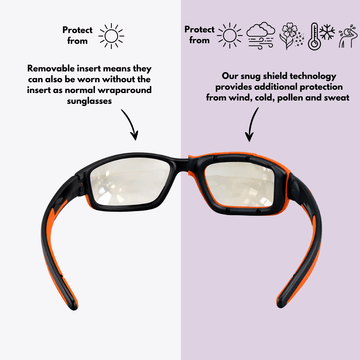
Standard sunglasses can help reduce brightness and UV exposure, but they often leave gaps around the top, bottom and sides of the frame. Wind can still swirl around the lenses and reach the eye area.
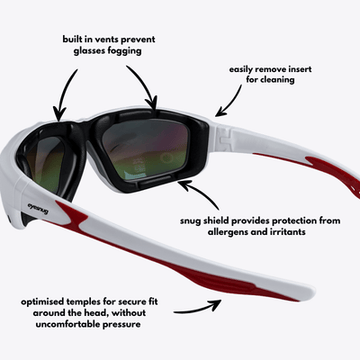
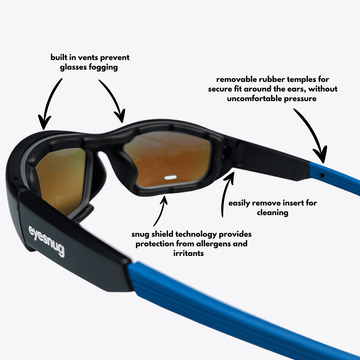
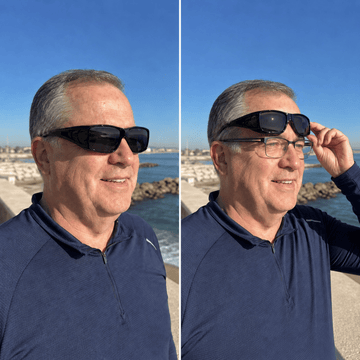
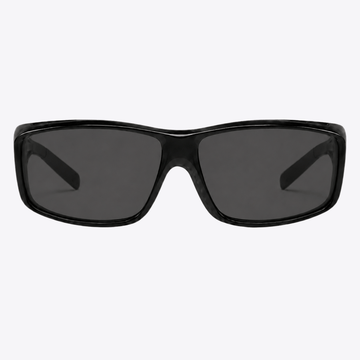
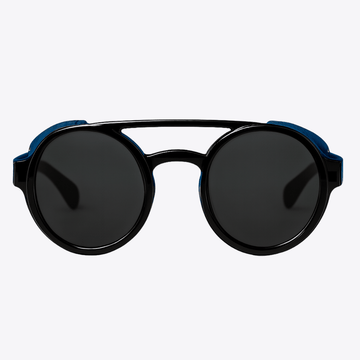
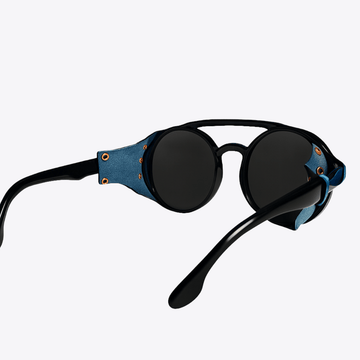
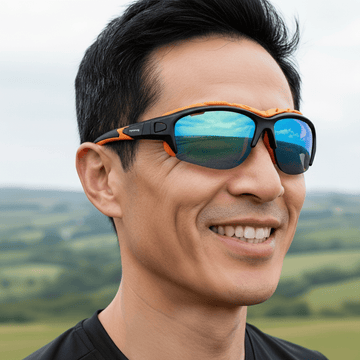
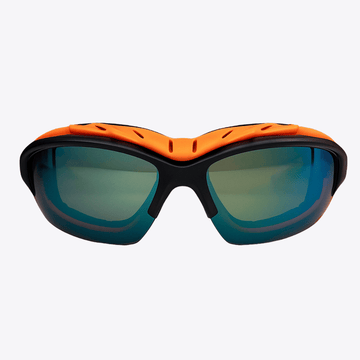
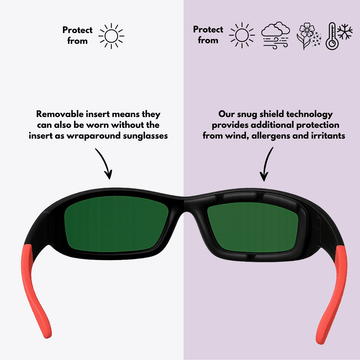
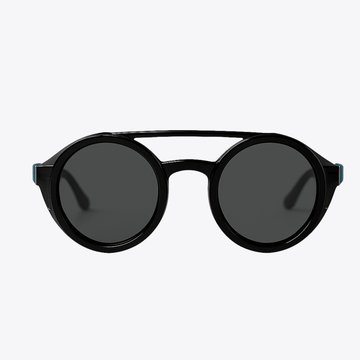
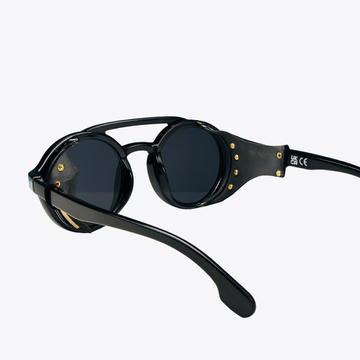
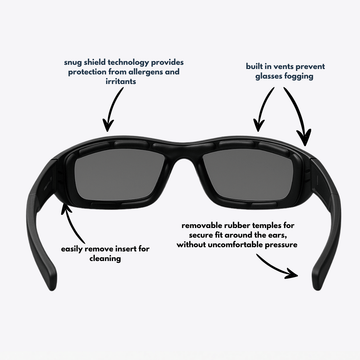
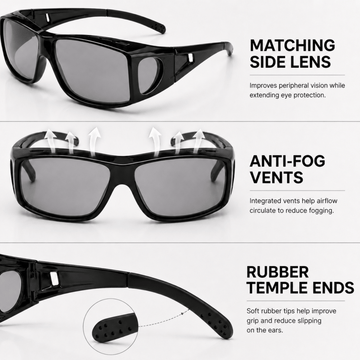
Close-fit wraparound sunglasses are different. They are designed to sit closer to the face and reduce the open gaps where wind, dust and pollen can enter.
This does not mean sunglasses treat or prevent an eye condition. However, a better-fitting frame may help reduce direct exposure to wind and airborne irritants, which can make outdoor time feel more comfortable for people with sensitive eyes.
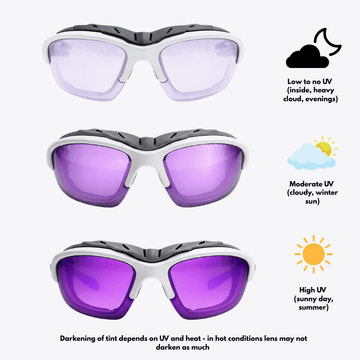
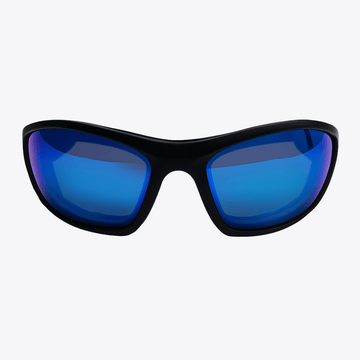
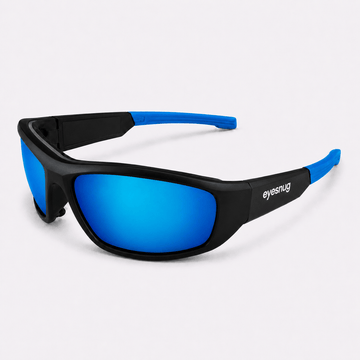
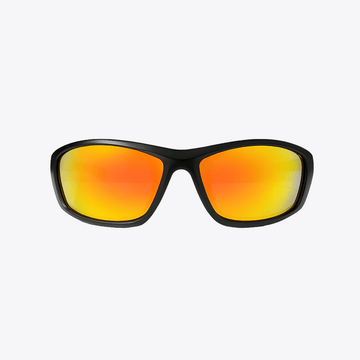
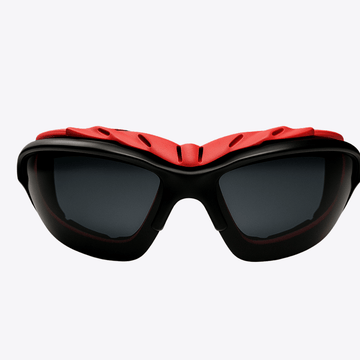
Eyesnug sunglasses are designed with this kind of everyday outdoor comfort in mind. Our close-fit wraparound designs help shield the eye area from wind, dust, pollen and glare while still looking like practical everyday sunglasses.

What makes close-fit sunglasses useful in windy weather?
When choosing sunglasses for watery or sensitive eyes outdoors, look beyond lens colour alone. The shape and fit of the frame matter too.
A good outdoor pair should ideally offer:
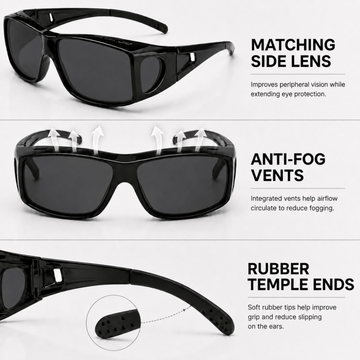
- A wraparound shape to reduce side gaps
- Close-fitting coverage around the eye area
- UV400 lenses for everyday sun protection
- Glare reduction for bright conditions
- A secure fit that stays comfortable while moving
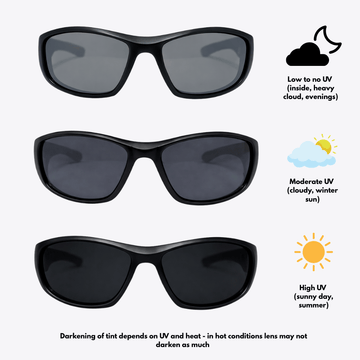
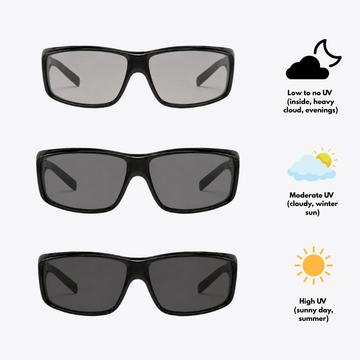
- A practical lens option for your usual environment, such as polarised or photochromic lenses if needed
For people who find that wind, pollen or dust regularly affects their eyes outdoors, a close-fit frame can be a useful barrier.
Other simple ways to help protect your eyes outdoors
Alongside protective eyewear, these simple habits may help reduce irritation from wind and dry outdoor conditions:
- Wear close-fit sunglasses on breezy days, not just sunny days
- Avoid walking directly into strong wind when possible
- Take breaks from contact lenses if they make outdoor discomfort worse
- Keep glasses clean, especially during pollen season
- Avoid rubbing your eyes, as this can make them feel more irritated
- Speak to a pharmacist, optician or GP if symptoms persist or affect daily life
If your eyes are painful, your vision changes, or watering is persistent and interfering with everyday activities, seek professional advice.
Why Eyesnug is designed for windy outdoor days
Eyesnug was created for people who enjoy being outside but struggle with wind, glare, pollen, dust or general eye sensitivity.
Our sunglasses are designed to offer more coverage than standard fashion sunglasses. The close-fit wraparound shape helps reduce the amount of direct airflow reaching the eye area, while UV400 lens options help protect against bright outdoor light.
They are especially useful for everyday situations such as:
- Dog walks
- Gardening
- Coastal walks
- School runs
- Cycling
- Driving
- Walking in cold or breezy weather
- Being outdoors during pollen season
They are not a medical device and they are not intended to diagnose, treat or cure any condition. They are simply designed to help shield sensitive eyes from common outdoor triggers.

The takeaway
Eyes often water in windy weather because the eye surface is being exposed to fast-moving air, cold air, dryness or airborne particles. The extra tears are usually your eyes’ natural response to irritation.
If this happens to you regularly, close-fit wraparound sunglasses may help by reducing direct exposure to wind, dust, pollen and glare. For many people, that can make walks, errands, gardening and outdoor activities feel more comfortable.
If watering is persistent, painful, one-sided, affects your vision, or gets in the way of daily life, speak to a pharmacist, optician or GP for advice.
FAQ
Is it normal for eyes to water in the wind?
Yes, it can be normal for eyes to water in cold or windy weather. Wind can irritate the eye surface or disturb the tear film, causing the eyes to produce extra tears.
Why do my eyes water if they feel dry?
Watery eyes can sometimes be a response to dryness or irritation. If the eye surface feels dry, your eyes may produce extra tears, but those tears may not always give lasting comfort.
Can sunglasses stop my eyes watering in the wind?
Sunglasses cannot guarantee that your eyes will stop watering. However, close-fit wraparound sunglasses may help reduce direct exposure to wind, dust, pollen and glare, which can make outdoor conditions feel more comfortable.
Are wraparound sunglasses better than normal sunglasses for wind?
For windy conditions, wraparound sunglasses can be more protective than flat-front sunglasses because they reduce the gaps around the sides of the frame. This helps limit airflow reaching the eye area.
When should I get advice about watery eyes?
Seek professional advice if your eyes keep watering and it affects daily life, if you have eye pain, changes to your vision, swelling, or symptoms that do not improve.